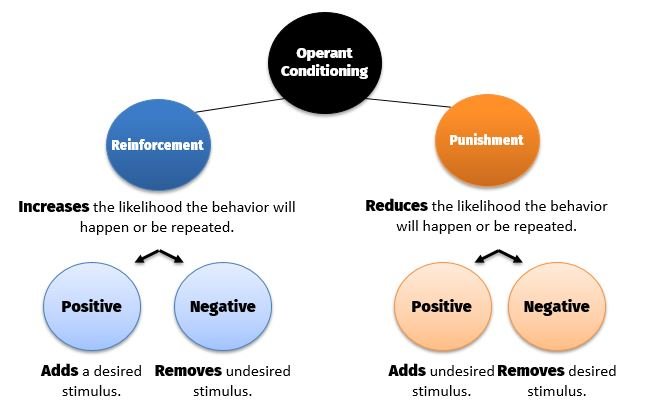
Consumer learning is basically how we pick up purchase and consumption knowledge from experience, then carry it into future decisions. In the learning process, four building blocks show up again and again: motivation (a need or goal that pushes us), cues (stimuli that guide us), response (what we do), and reinforcement (what makes that response more likely next time).
This is where operant conditioning comes in. Unlike classical conditioning (which links two stimuli), operant conditioning is about consequences; behaviour changes because it is rewarded or punished. The TED-Ed lesson explains the core idea simply: actions followed by reinforcement tend to be repeated, actions followed by punishment tend to reduce.
Operant conditioning usually shows up in three practical forms:
- Positive reinforcement: you get something you value after the behaviour, so you repeat it. Think loyalty points, free upgrades, “buy 9 get 1 free”.
- Negative reinforcement: you avoid something unpleasant, so the behaviour stic give a neat example: self-scanning helps you avoid queues, so you are more likely to use it again.
- Punishment: an unpleasant consequence reduces the behaviour, like fees for late returns or penalties for cancelling last minute.
If you want a quick on, the YouTube clip uses a simple reward setup to show how a behaviour can be shaped through consequences.
As students, the takeaway is straightforward: when you analyse a campaign, look for the cue, the behaviour it wants, and the *reinforcer Learning it feel worth it.
I really enjoyed reading this informative and well-laid out blog! I found the information easy to read and organised.
I enjoyed the section explaining the definition of operant conditioning and the bullet points explaining different forms, which I thought was useful. I also liked the section referencing to the TED-Ed lesson explaining the core idea simply, I think it was a great example to note.
One thing you could possibly change is maybe adding another reference to strengthen your points. Overall though, really great, well written blog!
I really enjoyed reading this post and I think you explained consumer learning in a really clear and simple way without oversimplifying it. Breaking it down into motivation, cues, response and reinforcement made the process easy to follow. I feel the examples of loyalty points and self-scanning were especially strong because they show how operant conditioning works in everyday situations we don’t even think about. The way you separated positive and negative reinforcement was also really clear. One thing I think could strengthen it slightly is tightening the final paragraph and fixing a small wording slip so it flows more smoothly. Overall, this was practical, easy to understand, and a great reminder to always look for the reinforcer behind behaviour.
You’ve done a solid job explaining operant conditioning and how it applies to consumer learning. The blog makes the concept easy to grasp, and your real-life marketing examples help bring the theory to life, which is really useful for readers who are learning consumer behaviour.
One thing that could improve the post is adding a bit more connection to wider learning theory or research. Briefly referencing how operant conditioning fits with other cognitive or behavioural learning theories would help strengthen the academic grounding of your explanation while still keeping the tone accessible and engaging.
This is a clear and structured blog, I really like how you’ve broken operant conditioning down into practical forms and made it easy to apply to marketing contexts. The cue–behaviour–reinforcer lens at the end is especially useful as an analytical tool!
You could move slightly beyond explanation into critique, operant conditioning assumes behaviour is shaped mainly through external consequences but does that fully explain modern consumer decisions, especially in high-involvement purchases? Are we always responding to reinforcement, or sometimes to identity, emotion, or social influence instead?
You could also question the longevity of reinforcement effects. Do loyalty schemes genuinely build long-term brand attachment, or just behavioural compliance as long as rewards continue? This would link nicely to intrinsic vs extrinsic motivation and whether reinforcement creates habit or just dependency.
Also, what punishment is actually effective in marketing contexts? While it can reduce behaviour (e.g., fees), could it also damage brand relationships or trigger reactance?
Well done Liam, this was a well-structured blog post that was easy to understand and straight to the point. Breaking down the three forms of operant conditioning made it clear what each form was and made it easy to picture how this could be used in real marketing campaigns.
To improve, you could’ve provided specific examples of campaigns you’ve seen that use operant conditioning, or maybe even real-life situations where you have experienced it. This makes the read more engaging and relatable for the reader. You could have also referenced the theorist and gave some background as to how he came to the conclusion of the operant conditioning theory.
I like how clearly you broke down motivation, cues, response and reinforcement, it makes operant conditioning feel much more practical than just theory. The self-scanning example especially stood out because it shows how reinforcement doesn’t always have to be a reward, it can just be convenience.
It made me think about whether reinforcement eventually turns into habit rather than conscious choice. Do you think loyalty schemes create genuine preference, or do they just train behaviour over time?
This is a great blog post on Operant Conditioning!
I enjoyed the comparison between positive and negative reinforcement and what actually crosses as a punishment. You explained them well alongside providing examples such as “buy 9 get 1 free” loyalty points for positive reinforcement, enlightening the reader on how this works within the marketing world.
I also liked the section on explaining what operant conditioning actually is highlighting operant conditioning is about consequences, and applying them into rewards or punishments, which was well referenced with the TED-ED Lesson point.
One thing you could improve is emphasising on theories linked to this.
Overall great post, well done!